

- Details
- Hits: 2562
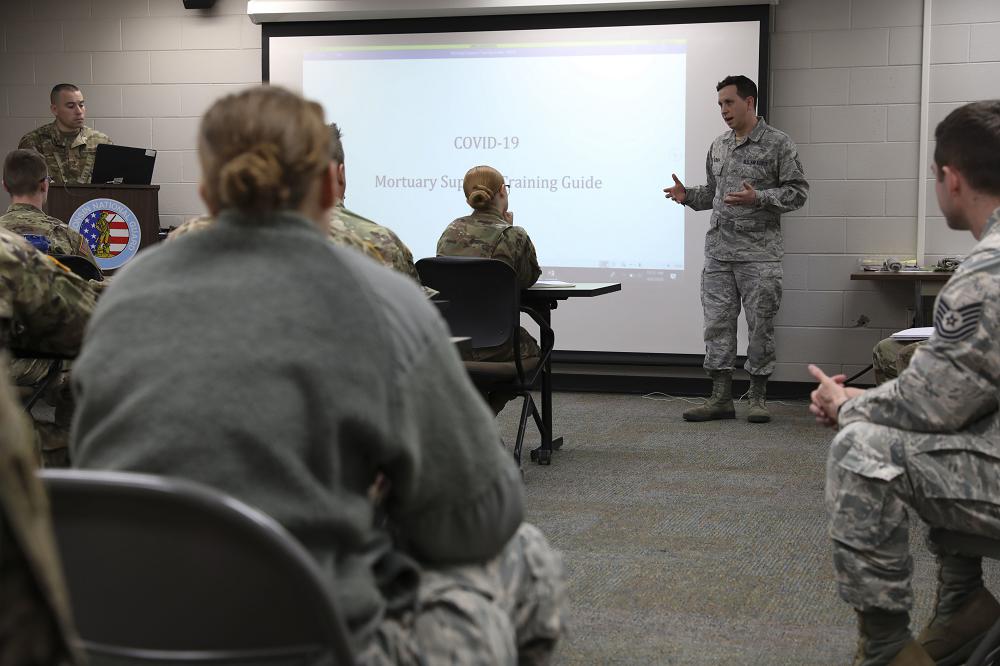 Master Sgt. Steven Ulrich instructs Wisconsin National Guard Soldiers and Airmen on mortuary affairs support in Whitewater, Wisconsin, April 8, 2020. Approximately 20 members of the Wisconsin National Guard Soldiers were trained to assist civilian mortuaries in response to COVID-19. (Photo by Spc. Anya Hanson)
MADISON, Wis. – Members of the Wisconsin Air National Guard’s 115th Fighter Wing Fatality Search and Recovery Team (FSRT) mobilized last month to assist the state’s medical examiners with mortuary operations in the COVID-19 response.
The team’s primary task is to assist the medical examiner and coroner with the dignified removal of remains from residences, transportation and cleaning and decontamination.
Read more: 115th Fighter Wing team assists with mortuary operations
- Details
- Hits: 1832
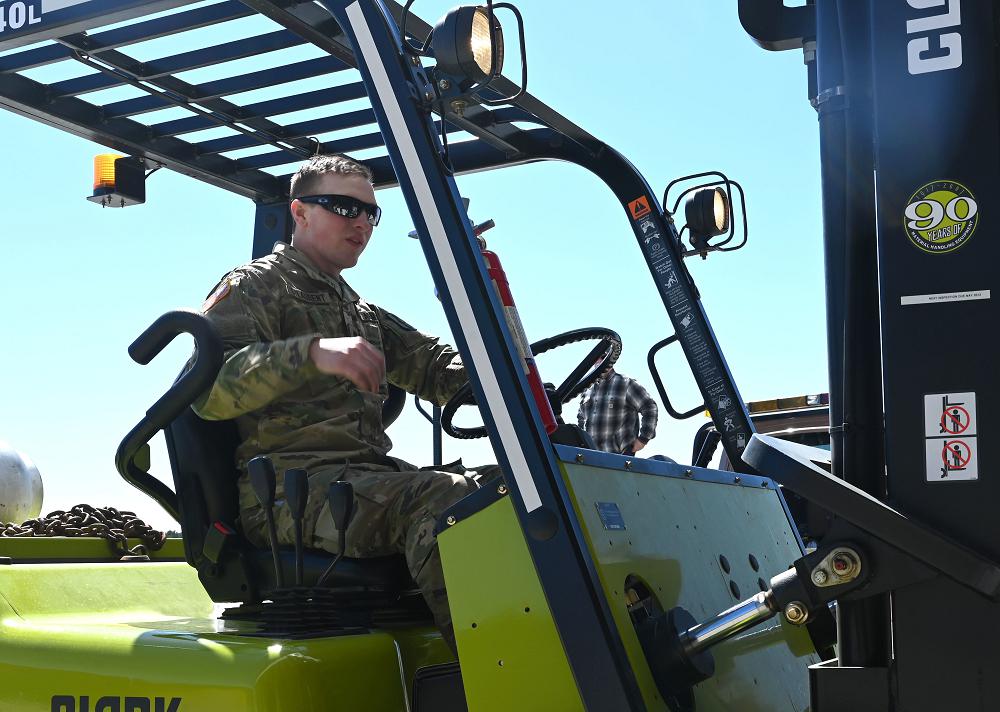 Spc. Andre St. Laurent, Headquarters and Service Company, 3643d Brigade Support Battalion, New Hampshire Army National Guard, loads freight in Concord, April 24, 2020. St. Laurent is one of 15 Guard members supporting COVID-19 relief efforts at a warehouse distribution center for the state's cache of personal protective equipment. (Photo by Staff Sgt. Charles Johnston)
CONCORD, N.H. – As the COVID-19 pandemic continues to drive demand for personal protective equipment, astute management of New Hampshire’s cache of masks, face shields, gowns and gloves is paramount.
The endeavor requires a full-time commitment of manpower and muscle to sort, store, secure and deliver a steady stream of PPE to first responders and healthcare professionals across the state.
Enter a dedicated team of New Hampshire Army National Guard Citizen-Soldiers.
Read more: New Hampshire Guard supports massive warehouse mission
- Details
- Hits: 1995
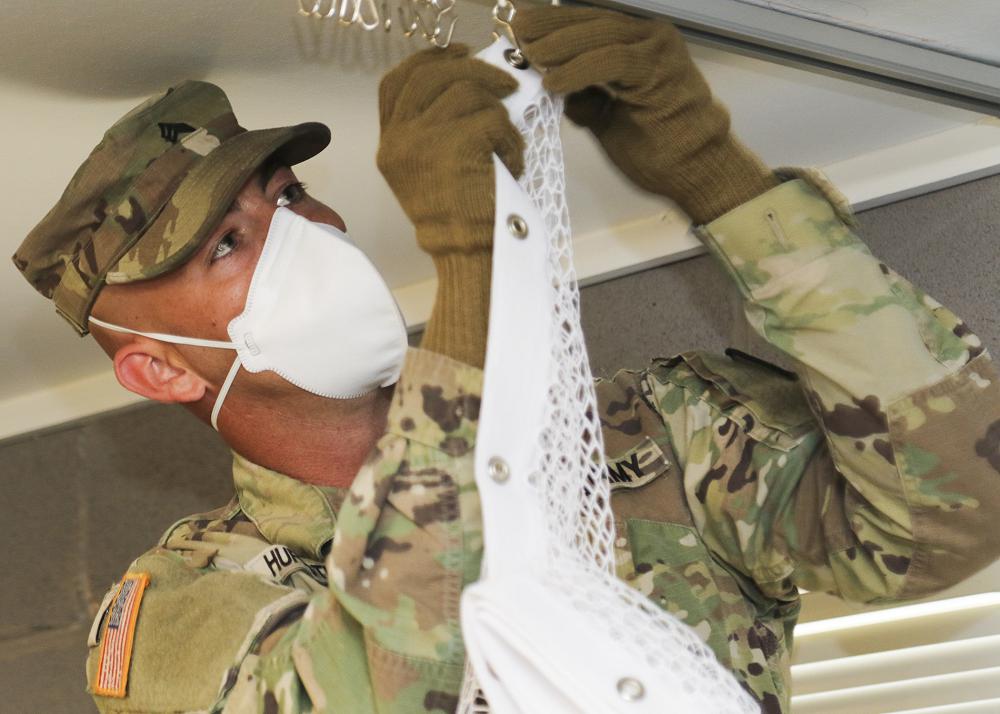 Texas Army Sgt. Keith Huffstuttler, a team leader with Task Force 176’s 840th Engineering Mobility Augmentation Company, installs curtains to separate beds in Camp Swift barracks to adapt them into medical isolation support facilities in Bastrop, Texas, April 17, 2020. The isolation facility is for Soldiers, Airmen and State Guardsmen suspected of having COVID-19. (Photo by Staff Sgt. Michael Giles)
CAMP MABRY, Texas – Texas Army National Guard combat engineers converted Camp Swift barracks in Bastrop into medical isolation support facilities.
The 840th Engineer Mobility Augmentation Company, which operates within the Texas Military Department’s Task Force 176, mobilized in response to the COVID-19 pandemic to enhance medical infrastructure in Texas.
Read more: Texas Guard converts barracks into isolation facilities
- Details
- Hits: 2423
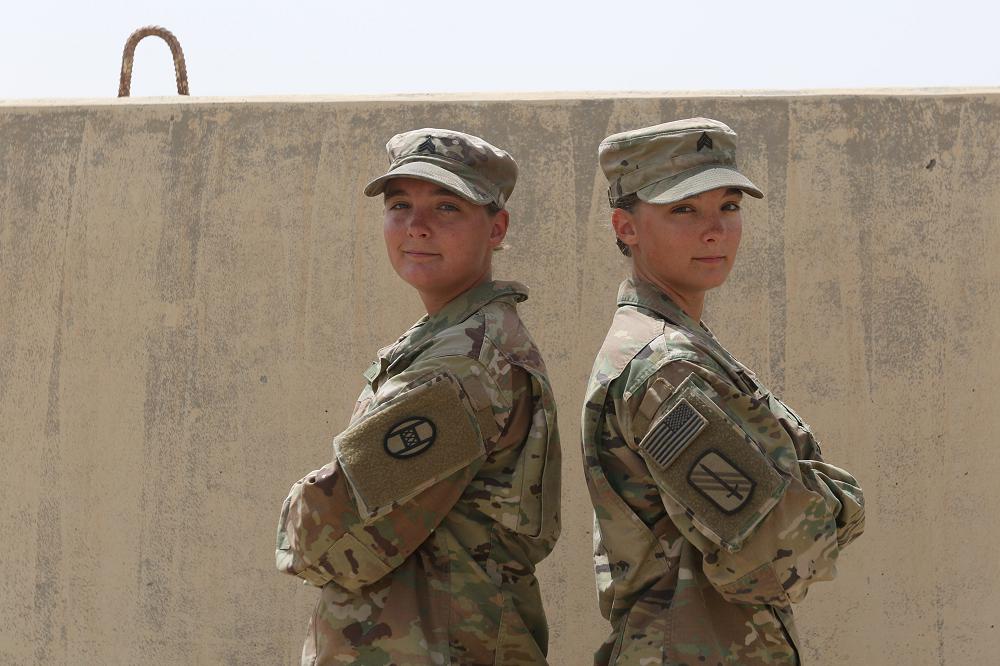 U.S. Army Sgt. Kaela Henasey and Sgt. Karissa Henasey deployed in the Central Command area of responsibility, April 10, 2020. The twin Soldiers are on their second deployment with the 30th Armored Brigade Combat Team, North Carolina National Guard.
(Photo by Capt. Regina Corbin)
UNDISCLOSED LOCATION – By Capt. Regina Corbin - Deployments can be tough and the U.S. Army uses the “battle buddy” system to ensure Soldiers are supported and never alone. The 30th Armored Brigade Combat Team has two Soldiers who are not only battle buddies; they are twin sisters.
U.S. Army Sgt. Karissa Henasey and Sgt. Kaela Henasey are deployed together for the second time with the 30th Armored Brigade Combat Team to the Middle East in support of Operation Spartan Shield.
Read more: North Carolina Guard twin Soldiers double down on deployment
- Details
- Hits: 2023
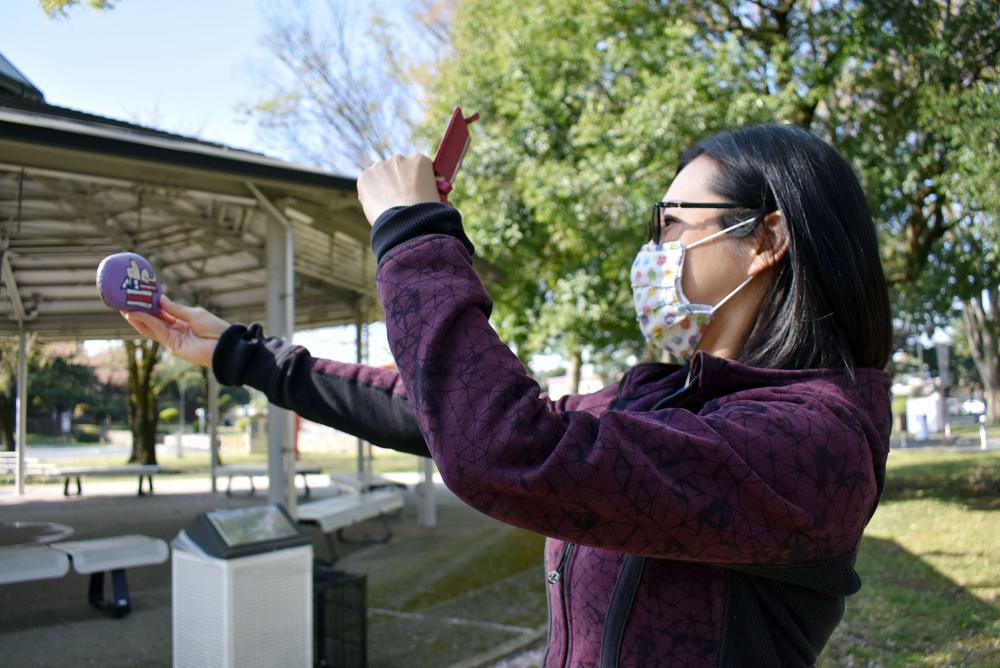 Sabrina Tsai, manager of the Camp Zama Arts and Crafts Center, takes a photo of a painted rock before hiding it for the center’s Easter Rock Hunt at Camp Zama, Japan, April 9. (Photo by Winifred Brown, U.S. Army Garrison Japan)
CAMP ZAMA, Japan (April 9, 2020) – Ever since Danielle Borja mentioned to her 4-year-old son Ta’si that there is a daily hunt for painted Easter rocks near their home, he wants to go every day.
“[He asks], ‘Mom, can we go for a walk? Can we go look for the rock eggs? Can we go?’” Borja said. “So he’s pretty excited, and it’s [his older siblings’] way of getting exercise since this whole pandemic situation is going on.”
Read more: Camp Zama Easter Rock Hunt a social distancing hit
- Details
- Hits: 1930
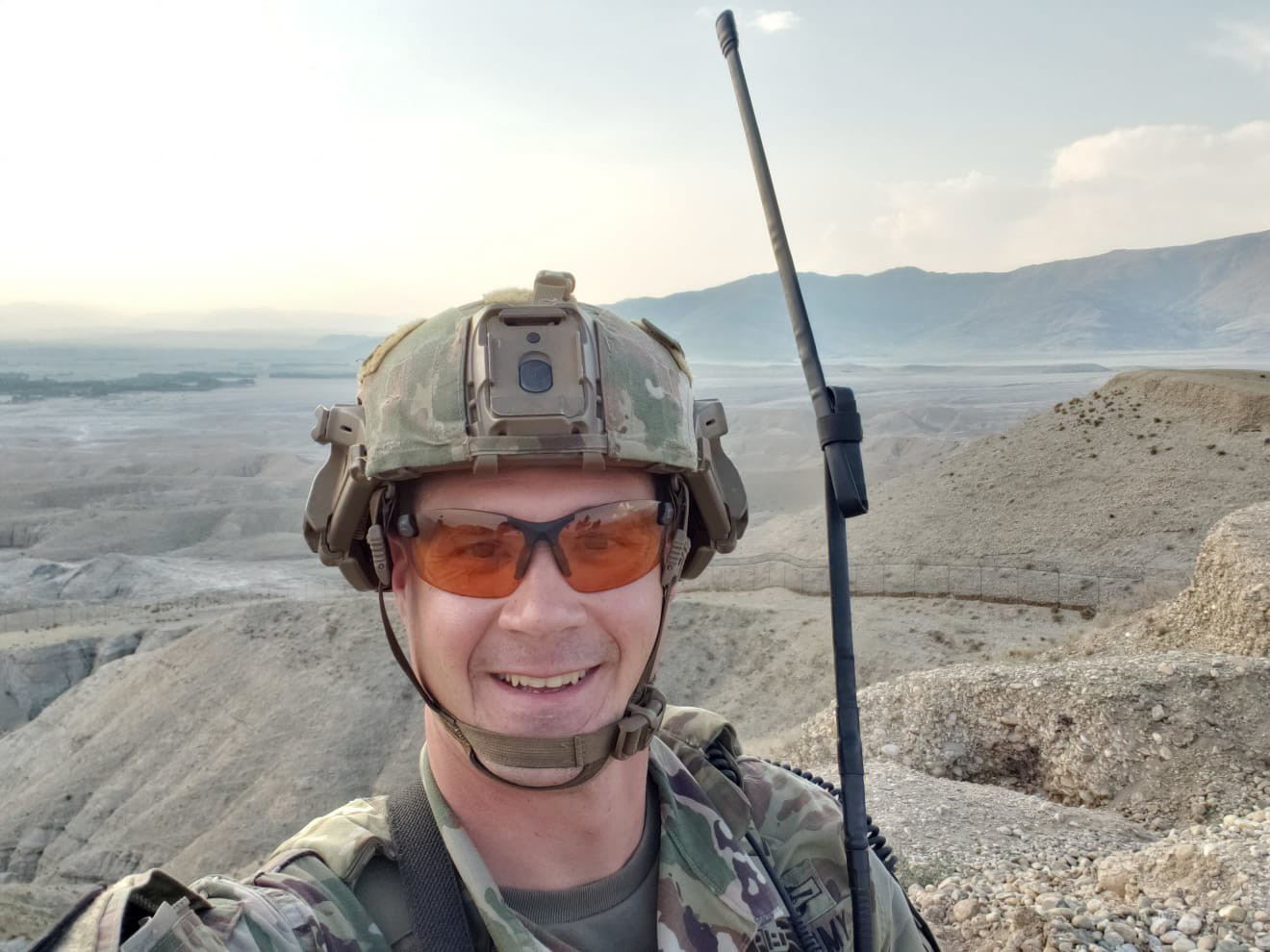 Staff Sgt. Benjamin Sieg, a quick reaction force squad leader in A Company, 1st Battalion, 128th Infantry, in Afghanistan. The 1st Battalion, 128th Infantry, deployed to Afghanistan in July 2019, and is acting as a “Guardian Angel” security element for the 3rd Security Force Assistance Brigade. (Photo by Courtesy)
By Capt. Joe Trovato
Afghanistan, March, 2020 – The Soldiers of the Wisconsin Army National Guard’s 1st Battalion, 128th Infantry, remain hard at work in Afghanistan.
The nearly 400 “Red Arrow” Soldiers from the 32nd Infantry Brigade Combat Team mobilized for deployment in July and serve as a security element for the Army’s 3rd Security Force Assistance Brigade, or SFAB. The 128th integrated into the 3rd SFAB as its seventh battalion.
Known as “Guardian Angels,” the Red Arrow Soldiers are providing force protection for key leader engagements and training between advisers, other coalition forces, contractors and Afghan troops.
Read more: Red Arrow Soldiers in Afghanistan build on legacy
- War Wagon’s all-female team supports COVID-19 response
- We are ready for this mission - Covid-19, Wuhan Virus, Chinese Virus
- Guard dual status allows flexibility, rapid COVID-19 response
- National Guard Ramping Up Wuhan Virus COVID-19 Response
- COVID-19 (aka Coronavirus 19, Wuhan Virus) DOW Stop Movement Order Issued
- U.S. Forces Honing Arctic Warfare Skills in Norway's High North in Exercise Cold Response 20